

Why Transfer FTP to Dropbox?

FTP is a standard file transfer protocol for computer users to transfer files from a client to a computer network. FTP may be the most traditional way to store files online and access data remotely using the computer network. Dropbox, on the other hand, is one of the most popular cloud storage and file-sharing services that offers 2 GB of free storage and great support for third-party tools. It has a huge number of free and paid users.
Many users change from FTP to Dropbox for its easy-to-use file storing, file syncing, and file-sharing features. You can only share FTP files with other users connected to the same FTP server. But if you move your files from FTP to Dropbox, you can then use the different sharing permissions to safely share your files with anyone. Besides, you can back up FTP to Dropbox to keep your FTP files safe without taking up local storage.
Two Manual Methods You Can Try Initially
While FTP cannot directly move files to Dropbox, these two straightforward manual methods let you transfer FTP files to Dropbox with minimal configuration, making them ideal for individual users and small-scale file management.
Manually Download and Upload [Best for a Few Small Files]
The most straightforward method is to manually download files from your FTP server to your local computer and then upload them to Dropbox. This method works well when you only need to move a few small files. However, it becomes inefficient for large datasets or frequent transfers because it requires local storage space and consumes additional time and bandwidth.
Step 1. Connect your FTP server using any FTP client like FileZilla or Windows FTP.exe. Here, take Windows FTP.exe as an example: Press Win + R and enter your FTP server address, then input your username and password.
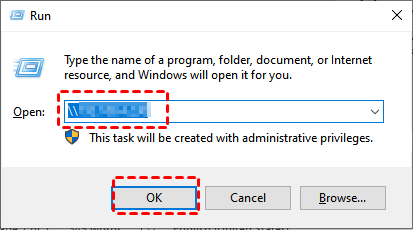
Step 2. Locate the files you wish to move and save it to your local drive.
Step 3. Log in to your Dropbox account and click "Upload" > "Files"/"Folder" to upload the files manually.
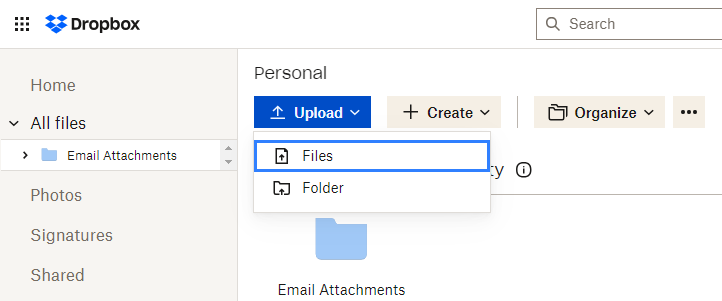
Move FTP Files to Dropbox Using FileZilla Pro
Another manual option is to use FileZilla Pro, which supports both FTP and cloud storage services like Dropbox. With it, you can connect your Dropbox as an FTP server. This allows you to transfer files more conveniently without switching between multiple platforms.
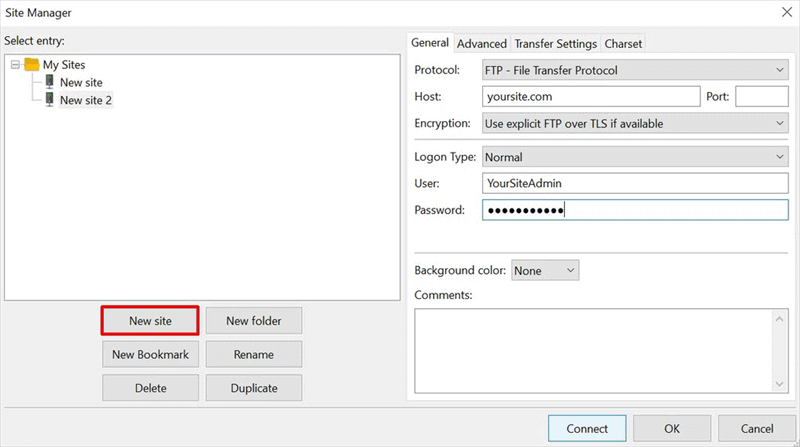
Step 1. Launch FileZilla Pro and go to "File" > "Site Manager" > "New Site". Enter your host, username and password and click "Connect" to link your FTP server.
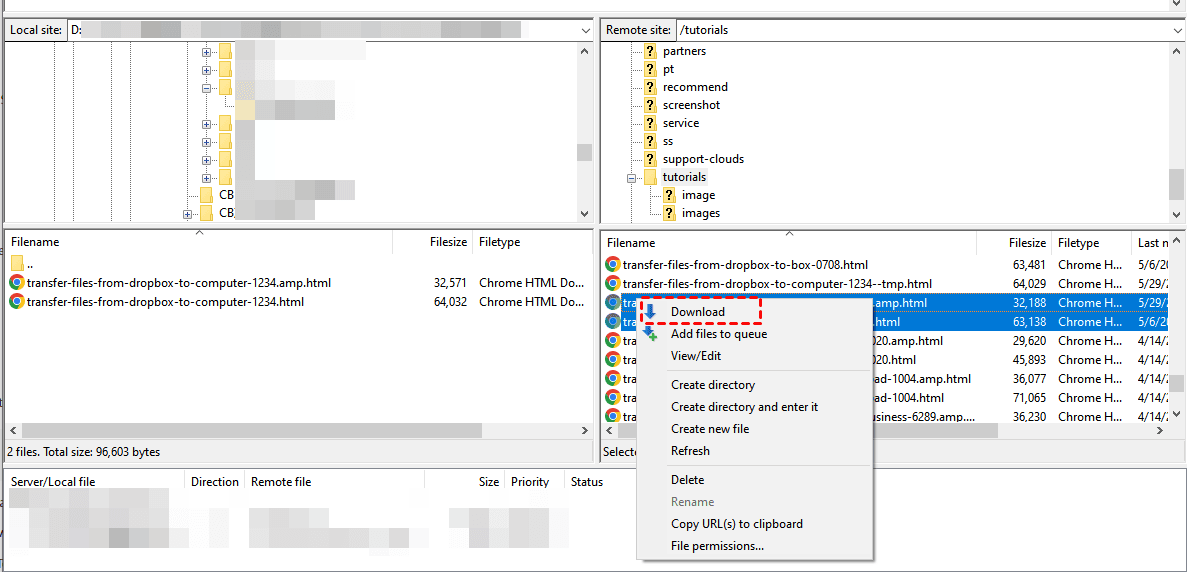
Step 2. Select the files you wish to move from the FTP server and right click on it, then select a destination folder in the left panel and click "Download".
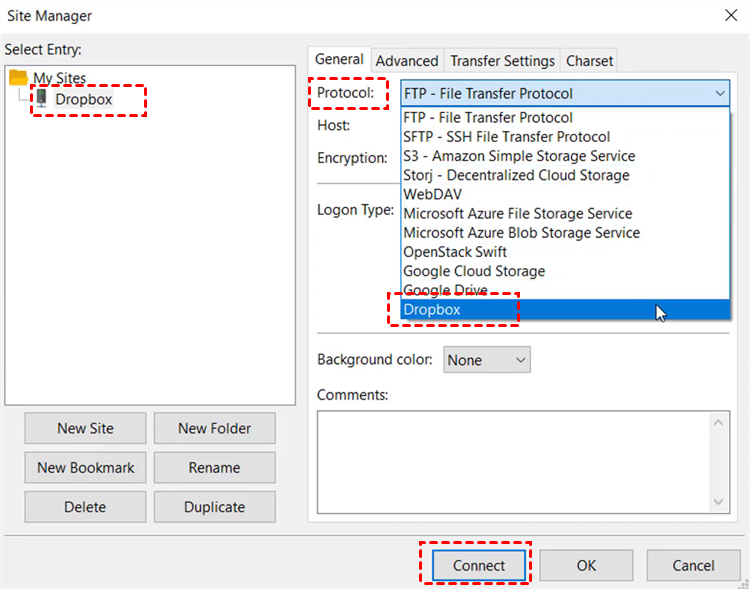
Step 3. Reconnect your Dropbox following the previous FTP connection procedure. Give your site a name and select "Dropbox" in Protocol drop-down menu, then click "Connect".
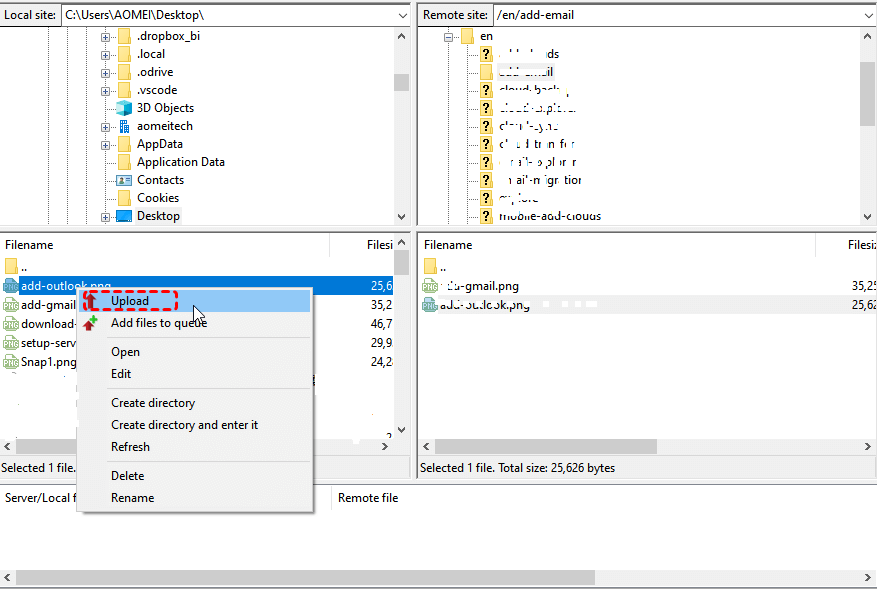
Step 4. Select a folder where you want to save it and right click on the downloaded files, choose "Upload".
How to Move FTP to Dropbox Easily Using MultCloud [Fastest & Automated]
Manually moving files from FTP to Dropbox by downloading from FTP and uploading to Dropbox can be a waste of time especially if your FTP data is significantly large. If you want to transfer files from FTP to Dropbox, here’s an easier way for you to try. You can use MultCloud to move anything you want from FTP to Dropbox or other cloud storage services.
MultCloud provides 10 high-speed threads for you to quickly and securely transfer data between clouds while saving you a lot of Internet bandwidth. And it supports more than 30 leading clouds no matter for personal or business. For FTP to Dropbox transfer, MultCloud offers two professional features to ease your way on how to move from FTP to Dropbox. One is Cloud Transfer and the other is “Copy to”.

- Cloud Transfer: Click one button and move files from source to destination with a file filter, schedule plan, and email notification. This is best for cloud-to-cloud data migration.
- Copy to: Select one or multiple destinations to copy a few files from one cloud to others simply. You can use this feature to move files and folders from FTP to more Dropbox accounts at once.
Way 1. One-Key Transfer FTP to Dropbox via Cloud Transfer
Step 1. Open the MultCloud website and create an account.
Step 2. Click “Add Cloud” and choose the FTP icon, then follow the pop-up window to add your FTP to MultCloud. After that, add your Dropbox or Dropbox Business to MultCloud in the same way.
Step 3. On the Cloud Transfer page, select your FTP or files and folders in it as the source, and select your Dropbox or a Dropbox folder as the destination.
Step 4. Click the “Transfer Now” button, and MultCloud will immediately move your data from FTP to Dropbox.
Tips:
- MultCloud offers 5 GB of free data traffic. You can upgrade your MultCloud account to get more data traffic and superfast transfer speed.
- In the “Options”, you can choose “Delete all source files after transfer is complete.” to migrate all the data from FTP to Dropbox. And you can turn on the email notification to be informed when the task is done. What’s more, the filter can help you ignore or only transfer files with certain extensions.
- You can also click “Schedule” to set up automatic FTP to Dropbox transfer.
Way 2. Transfer FTP Files to Dropbox Accounts via “Copy to”
Step 1. Open your FTP in MultCloud.
Step 2. Tick the files and folders in FTP and click the “Copy to” button in the feature bar.
Step 3. Tick “Multi-select” in the pop-up window and select the paths of your Dropbox accounts as the destination.
Step 4. Click “OK” and MultCloud will copy files from FTP to Dropbox accounts immediately.
Manage FTP Files More Flexibly with MultCloud: Sync & Backup
While MultCoud Cloud Transfer is a powerful way to move your SFTP files to Dropbox easily, it may not be the only way to manage your data depending on your specific needs. For example, some users may prefer continuous file synchronization with cloud storage like Dropbox, while others may need a more secure approach to protect website files and prevent unexpected data loss. In addition to transfer, MultCloud also provides flexible options for both real-time synchronization and full website backup, giving you more control over how your SFTP files are managed.
Sync FTP Files with Dropbox Automatically
MultCloud can not only help you transfer FTP to Dropbox but can also help you link to Dropbox via FTP without installing the Dropbox application on your computer. All you need is to use the Cloud Sync function of MultCloud to achieve the Dropbox to FTP sync with 10 multifunctional one-way, two-way, or real-time sync modes. By doing so, you can easily access your Dropbox data from FTP clients.
Step 1. On the Cloud Sync page of MultCloud, select your FTP as the source, and select your Dropbox or a Dropbox folder as the destination drive.
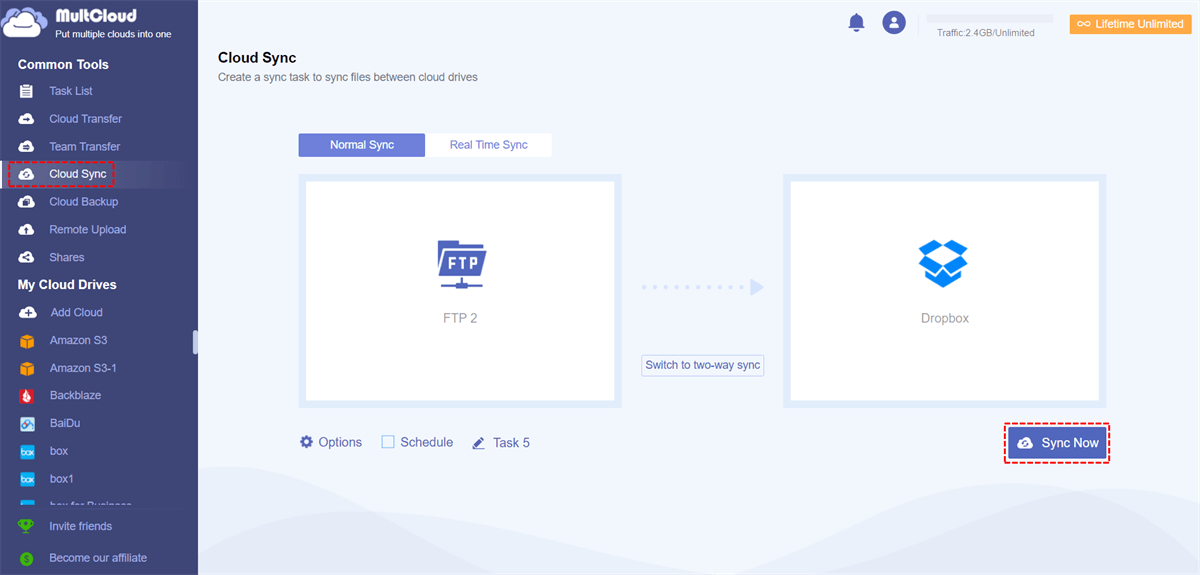
Step 2. Click “Options” to choose a sync mode you need in the pop-up window.
Step 3. Click the “Sync Now” button and MultCloud will sync your FTP files to Dropbox seamlessly.
Back Up a Website Files from FTP to Dropbox Automatically
However, if your FTP server is used to host website files, such as WordPress installations or other CMS-based websites, file synchronization alone may not be enough to ensure data safety. In cases where accidental deletion, server failure, or security issues occur, you need a more reliable way to preserve a complete copy of your website. This is where Website Backup becomes particularly useful, as it allows you to create scheduled backups of your entire website from FTP to Dropbox for long-term protection and recovery.
Step 1. Go to Website Backup and click "WEBSITE TO BACKUP" > "Add Website", then enter your FTP server address, username and password to add the website.
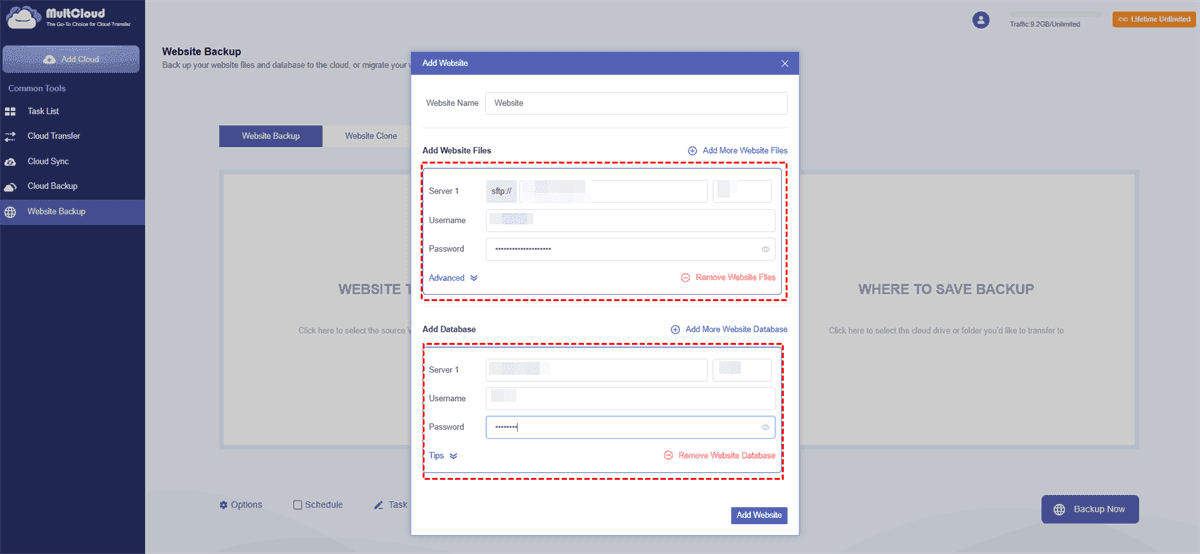
Step 2. Click "WHERE TO SAVE BACKUP" and select Dropbox, grant the access to MultCloud to add it as the target drive.
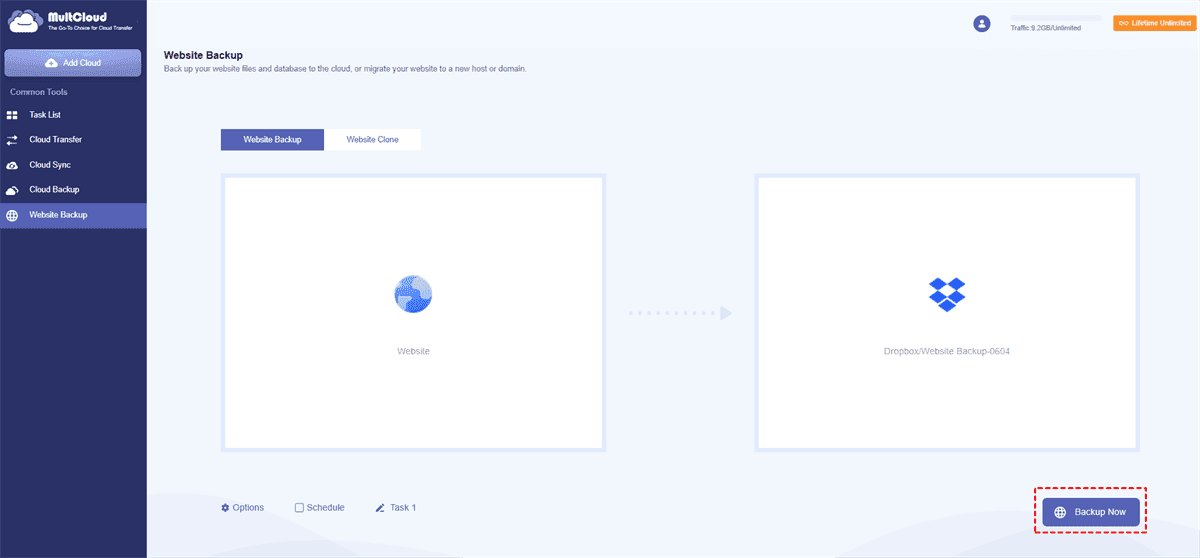
Step 3. Click "Backup Now" to start the process.
Similar to Cloud Transfer and Cloud Backup features, you may configure email notifications and scheduled tasks via the "Options" and "Schedule" buttons respectively.
In the End
Dropbox will help you a lot when you want to collaborate with your team members or share photos with your friends and family who are outside the FTP servers. You can choose the way you like in the article to transfer FTP to Dropbox without any risk of data loss.
Besides, MultCloud also provides the most convenient FTP to Dropbox backup solutions with the help of the Cloud Backup function. This function can help you backup FTP to Dropbox or other clouds without downloading and uploading. And you can quickly restore your backups from at most 1000 versions directly in MultCloud.
FAQs
Q1: Is FTP completely replaced by Dropbox?
Q2: Can I access Dropbox offline?
Q3: Is Dropbox safe for sensitive data?
Q4: Can I share files from Dropbox with non-Dropbox users?
Q5: Can I sync website FTP content straight to Dropbox?
Q6: How to automatically move FTP files into Dropbox?
Q7: How can I schedule recurring FTP to Dropbox transfers?
Q8: Is FTP transfer the same as FTP backup?
MultCloud Supports Clouds
-
Google Drive
-
Google Workspace
-
OneDrive
-
OneDrive for Business
-
SharePoint
-
Dropbox
-
Dropbox Business
-
MEGA
-
Google Photos
-
iCloud Photos
-
FTP
-
box
-
box for Business
-
pCloud
-
Baidu
-
Flickr
-
HiDrive
-
Yandex
-
NAS
-
WebDAV
-
MediaFire
-
iCloud Drive
-
WEB.DE
-
Evernote
-
Amazon S3
-
Wasabi
-
ownCloud
-
MySQL
-
Egnyte
-
Putio
-
ADrive
-
SugarSync
-
Backblaze
-
CloudMe
-
MyDrive
-
Cubby

Stay Updated With Our
Latest Tips
Add us as a preferred source on Google to never miss helpful guides.
 Add as preferred source >>