

Quick Search:
Can You Transfer Google Pictures to iCloud?
"I have more than 5000 photos stored on Google Photos and I'd like to know what's the easiest way to move them on iCloud photos. Since the free storage ends on June I want to move everything on iCloud."
Are you running out of free space on Google Photos, or perhaps you've recently switched from an Android phone to an iPhone and want all your precious memories stored in one place? Maybe you simply prefer the seamless ecosystem of iCloud Photos, where your pictures automatically sync across your iPhone, iPad, and Mac for easier access and management.
So, can you transfer Google Photos to iCloud Photos? Yes, you absolutely can. In fact, there is more than one method available, depending on how much time you have, how many photos you need to move, and whether you prefer a manual or more automated approach.
Why Move Google Photos to iCloud?
Google Photos is a cloud-based service designed for storing and managing photos and videos efficiently across devices. It allows users to back up media from smartphones or computers, offering useful features such as online editing, smart search, and easy sharing—meeting the needs of most everyday users.
On the other hand, iCloud Photos is Apple’s native cloud storage solution for photos and videos. As part of the Apple ecosystem, it provides seamless synchronization across iPhone, iPad, and Mac devices. Once enabled, your photos are automatically updated across all devices, helping you access and manage your memories more conveniently without manual transfers.
Google Photos vs iCloud Photos
When choosing between these two cloud services, it’s important to understand their strengths and limitations:
| Category | Google Photos | iCloud Photos |
| Native Integration | Works as a standalone cloud service; accessible across devices | Deeply integrated into Apple devices; photos sync automatically across iPhone, iPad, and Mac when iCloud Photos is enabled |
| Photo Management | Focuses on cloud-based browsing and AI-powered organization | Strong integration with macOS Photos app; supports albums and system-level syncing |
| Ecosystem Compatibility | Works well across Android, iOS, Windows, and web | Optimized mainly for Apple ecosystem with limited non-Apple functionality |
| Free Storage | 15 GB (shared with Google Drive & Gmail) | 5 GB (shared with Apple services) |
| Search Capability | AI-powered search (objects, faces, scenes, text) | Basic search by date, and albums |
| Ecosystem Integration | Integrated with Google services (Gmail, Drive, etc.) | Integrated with Apple devices and services |
| Best For | Users who switch devices or use multiple platforms | Users fully invested in Apple ecosystem |
While both services are powerful and widely used, many users consider switching due to Google Photos storage limit or ecosystem preferences. In such cases, moving from Google Photos to iCloud Photos becomes a practical choice, especially for users fully invested in Apple devices.
How to Transfer Google Photos to iCloud on Windows or Mac Computer?
In this section, we introduce two main methods to help you migrate Google Photos to iCloud on a computer. Whether you are using Windows or macOS, both solutions are fully applicable and easy to follow.
Way 1: Manually Download Google Photos and Upload to iCloud
This is the most straightforward method and works on both Windows and Mac computers. It involves directly downloading your selected photos or albums from Google Photos to your local device, and then uploading them into iCloud Photos.
Although the process is manual, it provides full control over what you transfer, making it ideal for users who prefer flexibility and want toselectively migrate their photo library without relying on third-party tools.
Step 1: Visit Google Photos and sign in with your account.
Step 2: Locate the photos and files you want to migrate from Google Photos to iCloud. Then select them all, click the 3-dos icon on the top right, and tap the Download button (or you can press "Shift + D" on your keyboard) to download photos and videos to your computer.
.png)
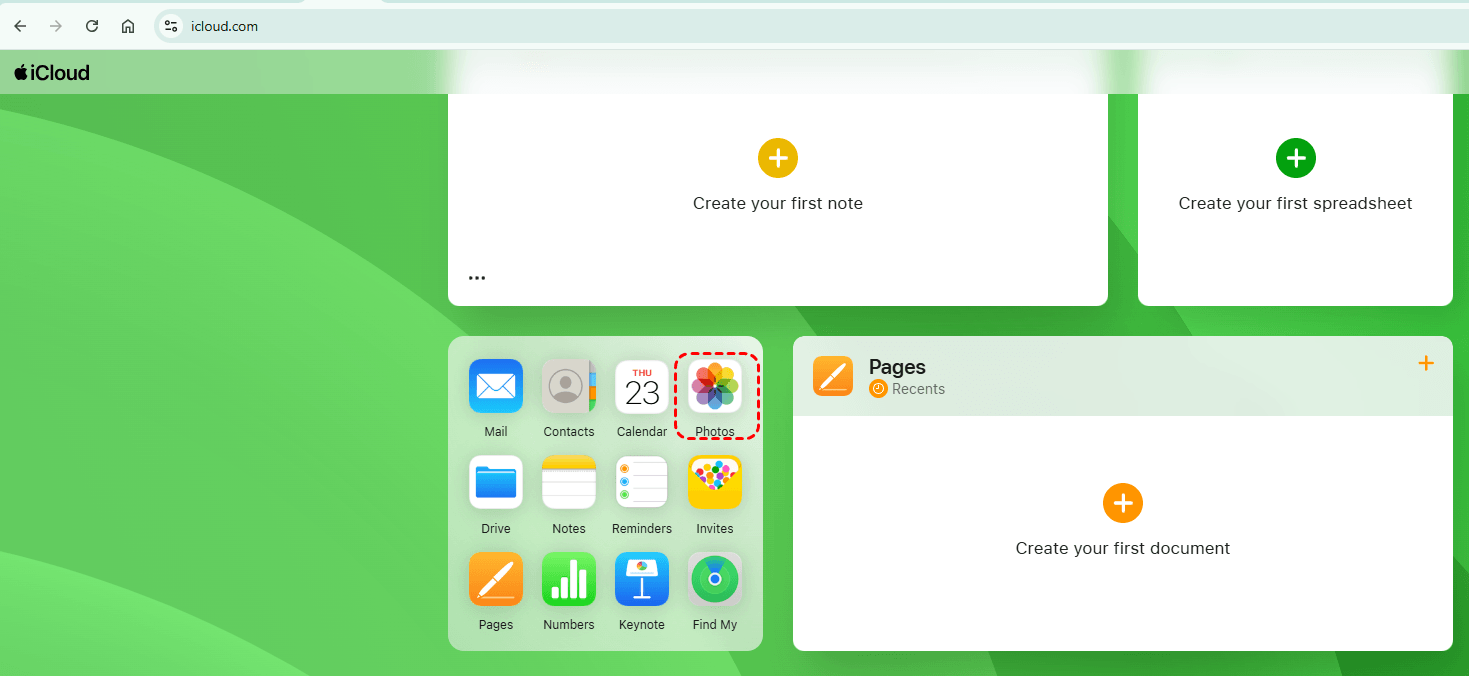
Step 3: Now, head to your iCloud on the web and select the Photos icon.
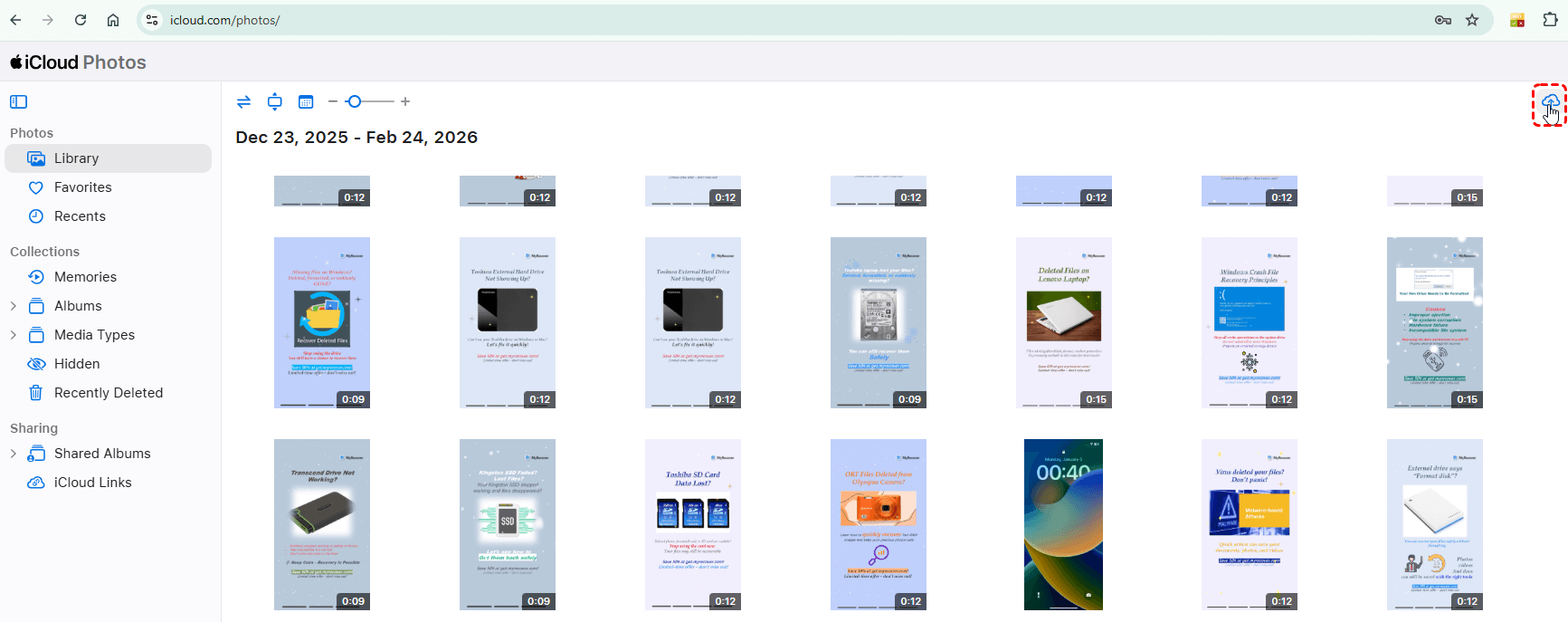
Step 4: Click the upload icon on the upper side and upload what you’ve downloaded from Google Photos.
Way 2. Directly Export Google Photos Albums Then Import Them to iCloud
If you want to keep their photo library more organized during migration, you can make use of "Google Takeout Custom Transfer" service. Instead of handling individual files one by one, it allows you to export entire albums from Google Photos and then import them into iCloud Photos(i.e., move all Google Photos into iCloud in one go) in a structured way.
This is especially useful for large photo collections, as it helps preserve album organization and reduces the risk of missing files during transfer.
Step 1: Open Google Takeout and begin creating a new export. Select Google Photos as the data you want to transfer.
Step 2: Choose "Apple – iCloud Photos" as the destination.
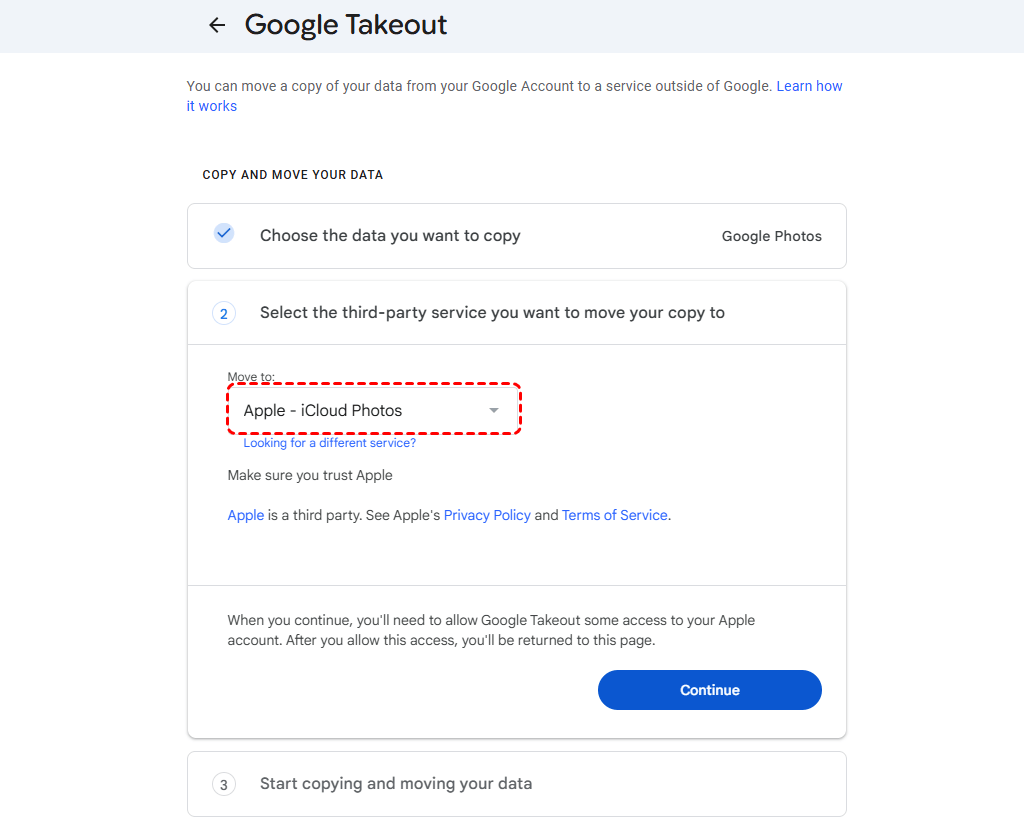
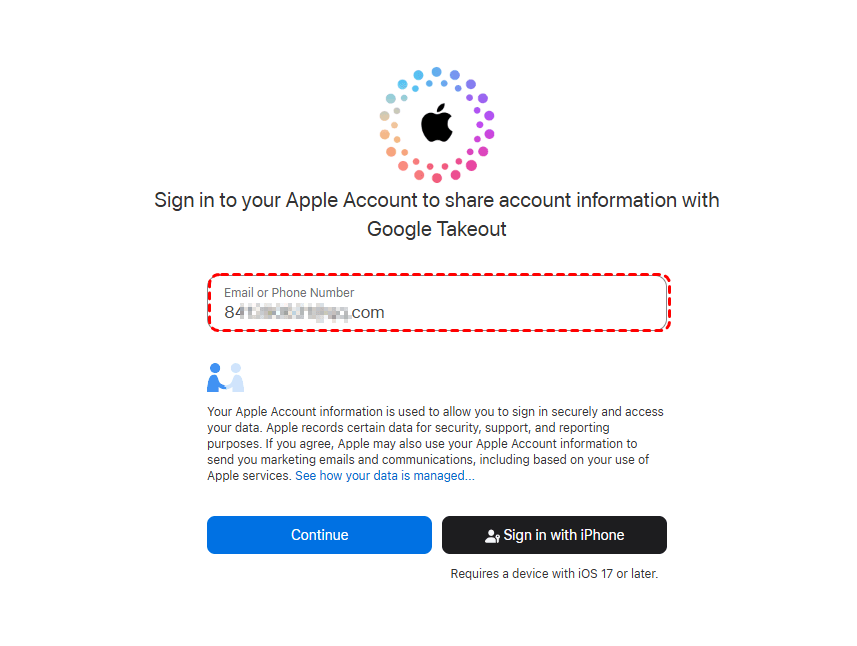
Step 3: Sign in with your Apple ID when prompted.
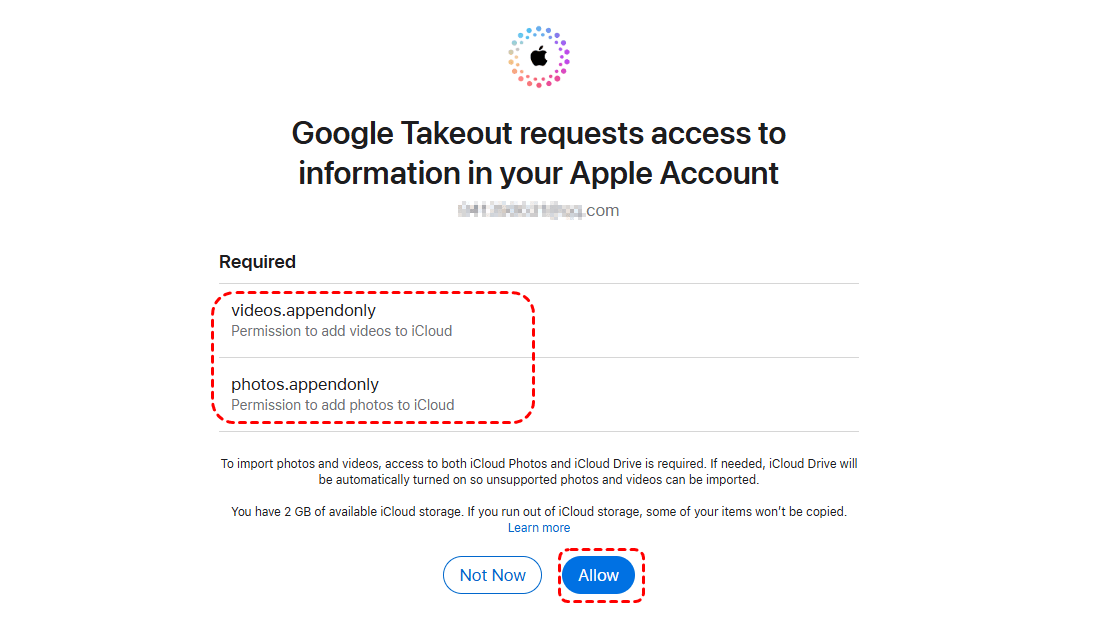
Step 4: Grant permission so Google can upload your photos and videos to iCloud.
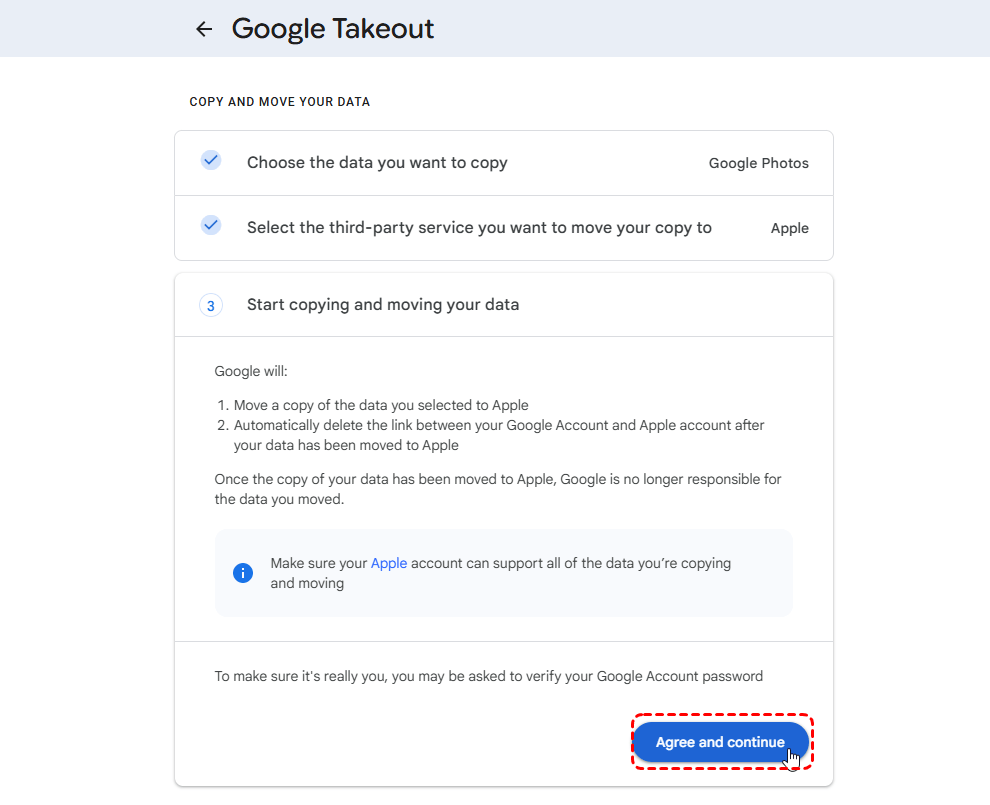
Step 5: Then you can click on "Agree and continue" button to submit the export request.
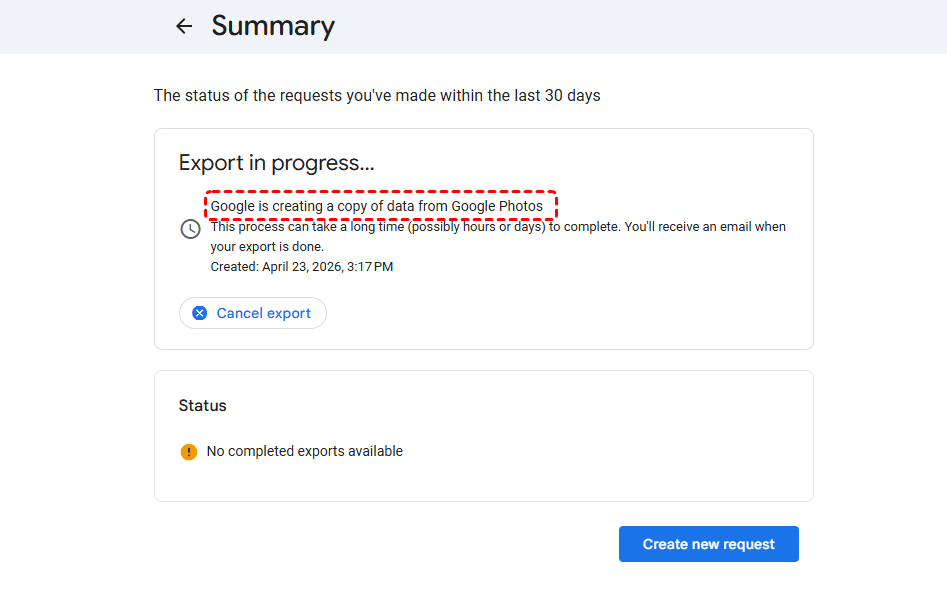
Step 6: Finally, wait for the transfer process to complete. You can monitor the progress during the export.
How to Transfer Google Photos to iCloud on Android?
If you look to move Google Photos from Android phone into iCloud account, you can also download photos from Google Photos first and then upload them to iCloud. The detailed steps are as follows:
Step 1: Open the Google Photos app on your Android phone. Select the photos or albums you want. Tap "Download".
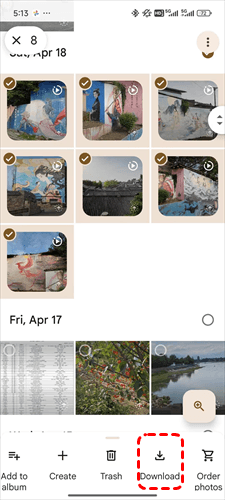
Step 2: Open a browser on your Android, go to iCloud.com and sign in to your iCloud.
Step 3: Confirm your operations by clicking the "Trust" button, then go to Photos.
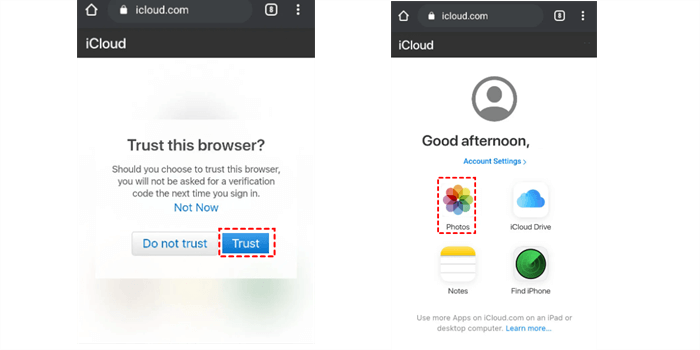
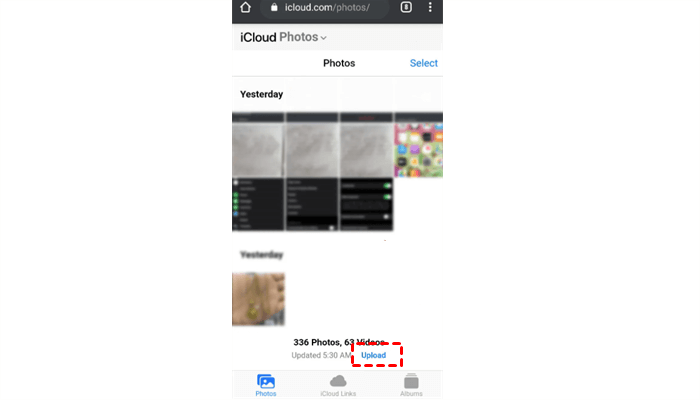
Step 4. Tap Upload and select your downloaded images.
How to Transfer Google Photos to iCloud on iPhone?
If you are using an iPhone, the process is even more straightforward because both Google Photos and iCloud Photos can run on the same device. You just need to download your photos from Google Photos and upload them to iCloud Photos.
Step 1: Download Photos from Google Photos
Open the Google Photos app on your iPhone. Select the photos or albums you want to transfer. Tap the Share icon and choose "Save to device"to download them to your iPhone’s local Photos app.
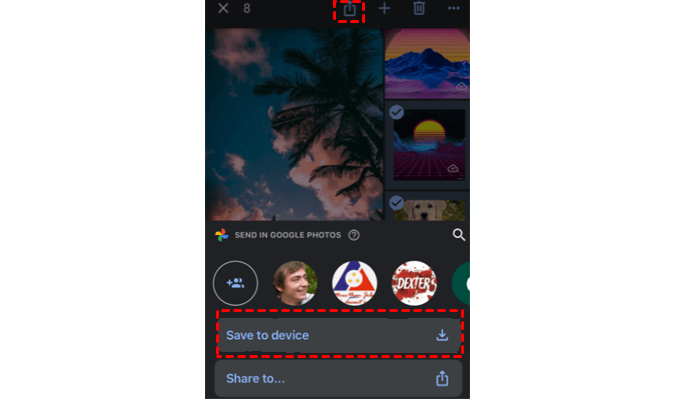
Step 2: Enable iCloud Photos
Go to Settings on your iPhone. Tap your Apple ID > iCloud > Photos, then turn on "Sycn this iPhone". This ensures that all photos in your iPhone’s Photos app will automatically sync to iCloud.
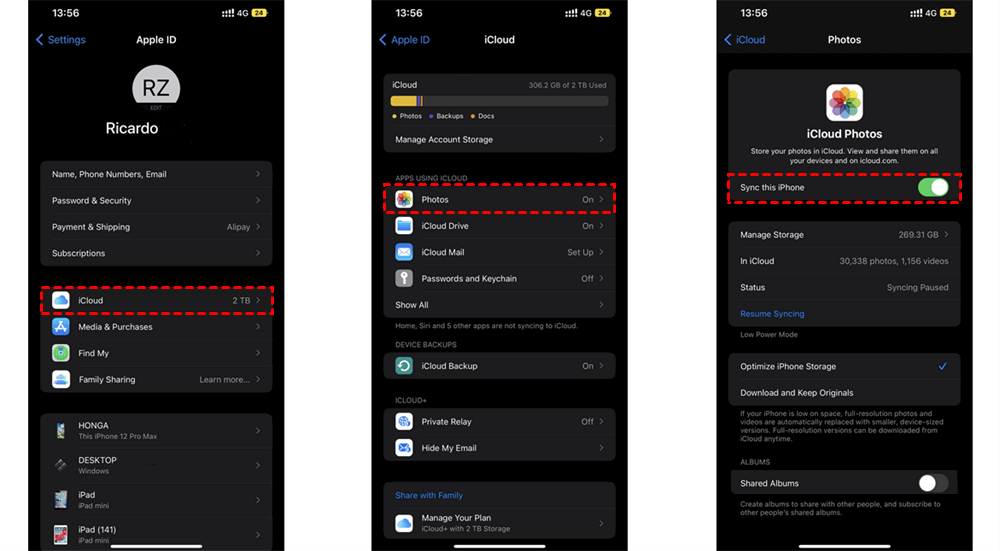
Step 3: Upload Photos to iCloud Automatically
Once iCloud Photos is enabled, open the Photos app on your iPhone. The downloaded Google Photos images will begin syncing automatically to iCloud when your device is connected to Wi-Fi.
MultCloud: Easiest Way to Move Google Photos to iCloud Across All Devices (PC and Mobiles)
If you are looking for a more efficient and flexible solution, MultCloud provides a powerful alternative for transferring Google Photos to iCloud without the limitations of traditional manual methods.

Unlike the previous approachess, MultCloud is a web-based cloud file transfer service that allows you to move data directly between cloud platforms, including Google Drive to Google Photos, Google Photos to OneDrive, Dropbox to Google Drive, etc. You simply log in through a browser, no matter whether you are using Windows, macOS, or Linux, and manage everything online without installing any software.
🌟No Downloads Required (Cloud-to-Cloud Transfer)
With MultCloud, you do not need to download photos to your local device first. Instead, it transfers data directly from Google Photos to iCloud Photos, saving both time and storage space.
🌟 Works Across All Operating Systems
Since it is entirely browser-based, MultCloud works seamlessly on Windows, Mac, and even Chromebook systems. There is no need for platform-specific installation or configuration.
🌟Automated Transfer Process
Once set up, transfers can run automatically in the background. You can schedule tasks or let the system complete large migrations without manual intervention.
🌟 Supports 40 Cloud Services
In addition to Google Photos and iCloud, MultCloud supports many popular cloud drives, making it a centralized platform for managing all your cloud storage accounts.
Move Photos from Google Photos to iCloud Photos on Computers
Step 1: Open your preferred browser and sign up for MultCloud for free.

Step 2: Head to Add Cloud, where you should add Google Photos and iCloud Photos, respectively, by clicking each icon.
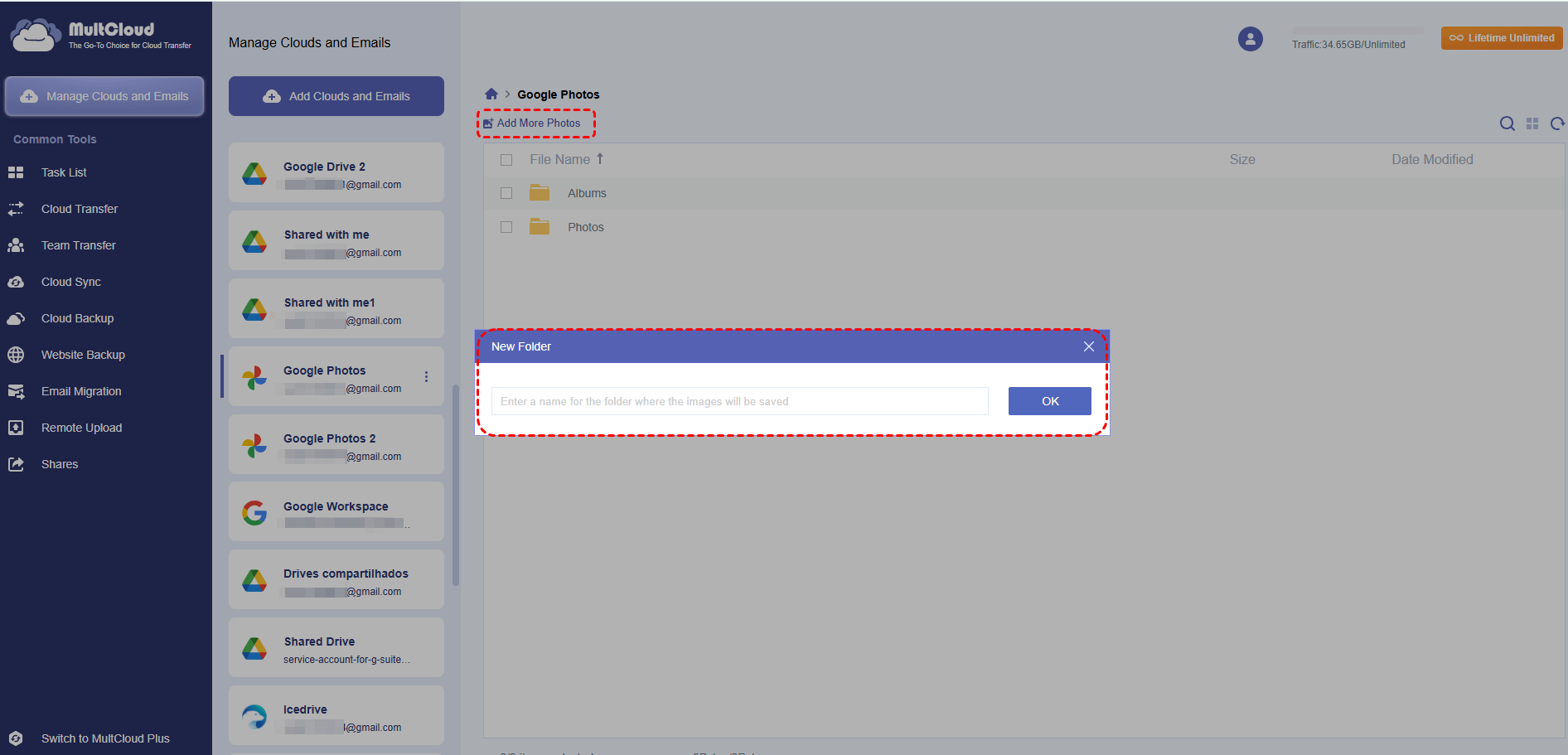
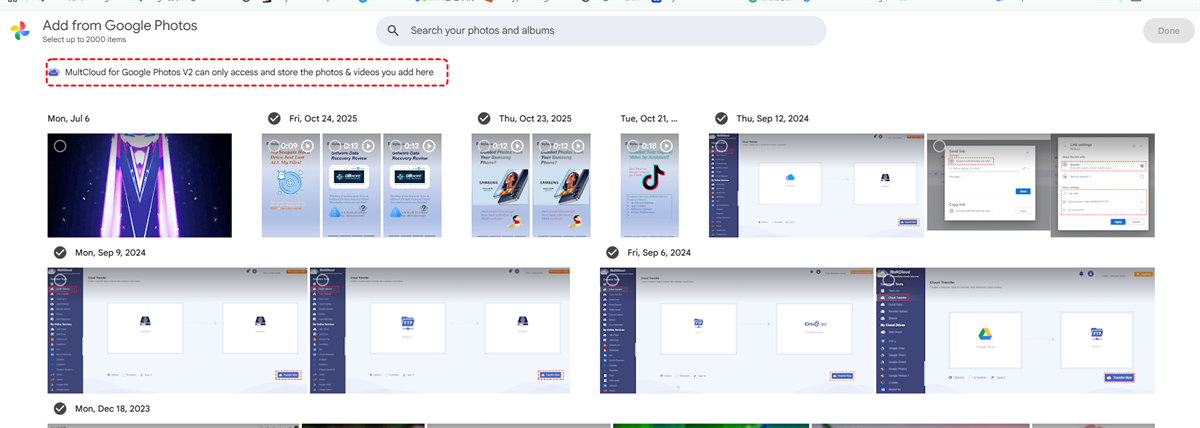
Step 3: In MultCloud, open Google Photos and click “Add More Photos” to create a folder for the photos and videos you want to migrate. Then visit the official Google Photos website, select the items you need, and add them to the folder you created.
Step 3: Now, click "Cloud Transfer", select the folder you prepared in Google Photos as the source, and iCloud Photos as the target. Then press "Transfer Now".
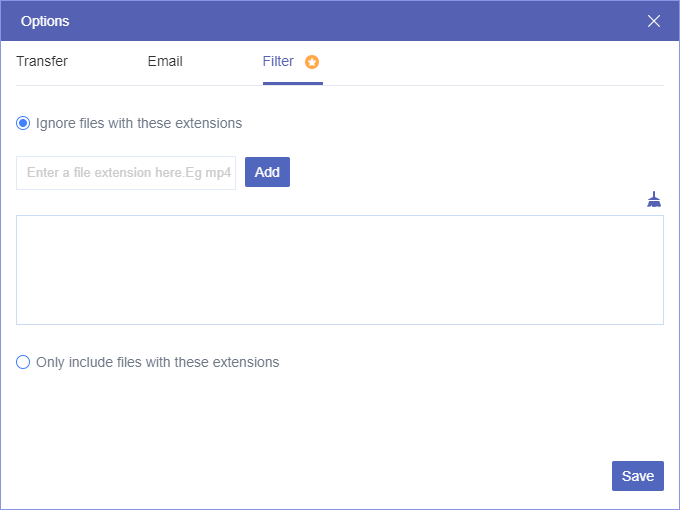
You can click Options to enjoy more features. You can use the email notification function as well as the filter feature to make your Cloud Transfer task smarter.
iCloud cannot directly sync with Google Photos, because they are separate cloud ecosystems with no built-in integration. However, you can connect them using MultCloud. It also offers "Cloud Sync" feature, enabling cloud-to-cloud sync between Google Photos and iCloud without downloading files to your device.
- Up to 10 sync modes, including real-time sync, two-way sync, one-way sync, move sync, mirror sync, cumulative sync, and full backup sync.
- Use the Schedule feature to automate syncing between clouds daily, weekly, or monthly.
- Set up Email notifications and Filters based on your needs.
- When Google Photos is the destination, choose Albums to store folders and Photos to store individual photos and videos.
Move Photos from Google Photos to iCloud Photos on Android or iPhone
MultCloud was originally designed for using web platforms, but now it also offers a dedicated application experience for Android and iOS devices, allowing you to manage and transfer photos directly from your smartphone. This makes it convenient for users who prefer handling everything on the go.
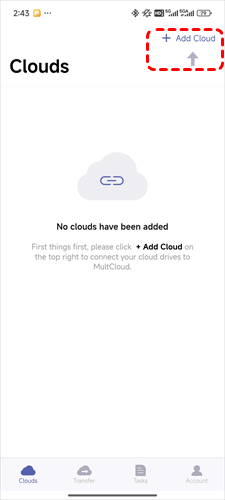
Step 1: Download and launch the MultCloud mobile app, tap the "Add Cloud" button to begin connecting your cloud services.
Step 2: Select the cloud platform you want to add (for example, Google Photos or iCloud). This allows MultCloud to access your files for transfer and management.
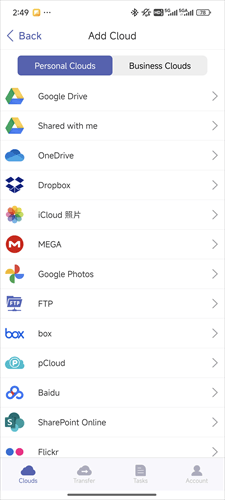
Step 3: Log in to your selected cloud service and grant permission. Once authorized, the cloud account will be successfully added to MultCloud. As with the PC version, you need to import the files you want to transfer from Google Photos into MultCloud first by following the same steps.
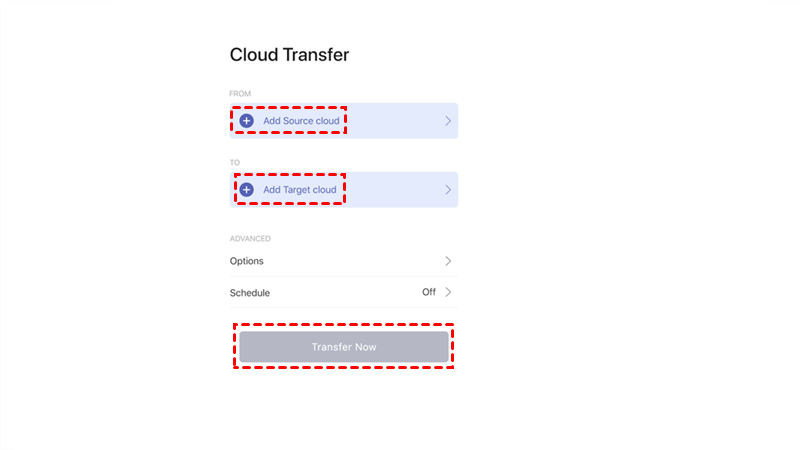
Step 4: Go to the Cloud Transfer feature. Here, you can select the source cloud (e.g., Google Photos) and the destination cloud (e.g., iCloud Photos).
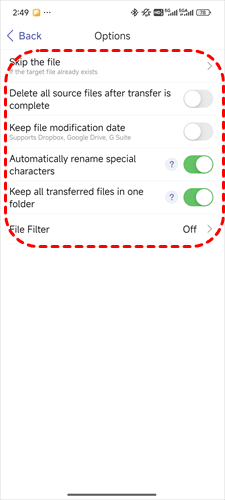
Step 5: Before starting the transfer, you can adjust settings such as overwrite rules, file filtering, or notification preferences using the Options menu.
Step 6: If you want the transfer to run automatically at a specific time, use the Schedule feature. This is useful for large photo libraries or unattended transfers.
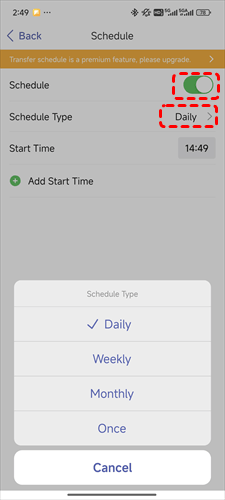
Step 7: Confirm your settings and start the process. MultCloud will transfer your photos in the background, allowing you to use your phone normally while the task runs.
FAQs about Google Photos to iCloud Transfer
What to Do Transfer Fails Because iCloud Storage is Full?
To avoid transfer fail due to insufficient iCloud storage, before transferring, check your iCloud storage at iCloud.com. If full, either upgrade your plan (Settings > Your Name > iCloud > Manage Storage) or free up space by deleting old backups and large files.
Why Do Live Photos Turn into Still Images?
Google and Apple handle motion photos in different ways, which can cause Live Photos to lose their motion when transferred. For the best results, it is recommended to use tools like Google Takeout or MultCloud instead of manual downloads, as they help preserve the original file structure and metadata.
Why Is the Transfer Extremely Slow or Keeps Getting Interrupted?
Web browsers can be unstable when handling large file transfers. For better performance, it is recommended to use a dedicated tool like MultCloud, which enables server-to-server transfer and does not rely on your browser remaining open. Alternatively, you can divide large photo libraries into smaller batches (such as by year) and ensure you have a stable internet connection throughout the process.
How to Move Photos from Google to iCloud without Duplicates?
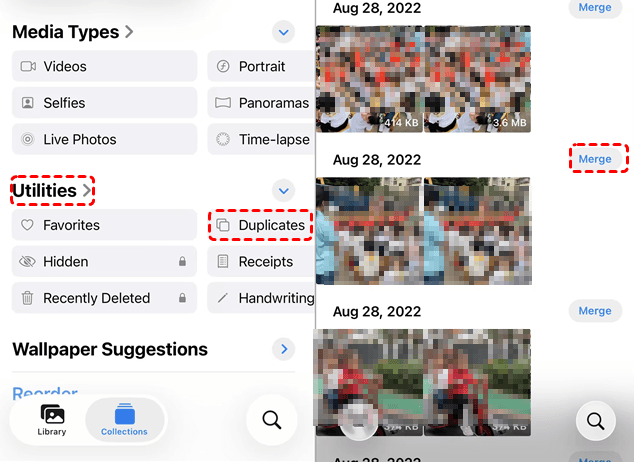
To avoid duplicates when moving photos from Google Photos to iCloud, first check iCloud to see if any photos already exist before starting the transfer. After the transfer is complete, open the Photos app and go to the "Collections" tab. Scroll down to the "Utilities"section and tap "Duplicates". There, you’ll see duplicate photos grouped together with a "Merge" button next to each group. Tap it to combine the duplicates and keep your library organized.
How to Transfer High Quality Google Photos to iCloud without Compression?
To avoid compression when moving Google Photos to iCloud, use Google Takeout or MultCloud, as both preserve original quality without re-encoding files.
How to Delete Photos off Google Photos without Deleting off iCloud?
To delete photos from Google Photos without affecting iCloud, you need to make sure the two services are no longer syncing the same files. First, confirm that your photos are already fully backed up in iCloud Photos. Then, turn off any backup or sync settings between your device and Google Photos (especially on Android or the Google Photos app "Backup & sync").
How to Transfer Google Photos to iCloud with Metadata?
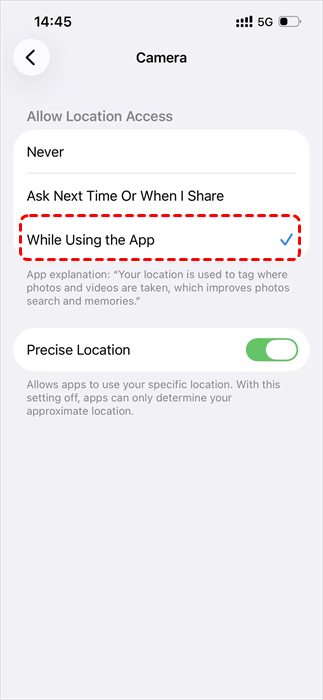
To transfer Google Photos to iCloud while preserving metadata, you need to use a method that keeps the original file structure intact like manual uploads and Google Takeout. Ensure you're not editing or re-saving photos during transfer. On iPhone, check Settings > Privacy > Location Services > Camera is set to "While Using the App" so iCloud reads embedded location data correctly.
How to Import Only Favorite Google Photos into iCloud?
To import only your favorite Google Photos into iCloud, open Google Photos and filter or select your "Favorites"(starred photos), then download those images to your device or export them using Google Takeout. Alternatively, you can organize all your favorite photos into a specific album and transfer only that album to iCloud using MultCloud for a more streamlined process.
How to Move Shared Google Photos Pictures into iCloud Folders?
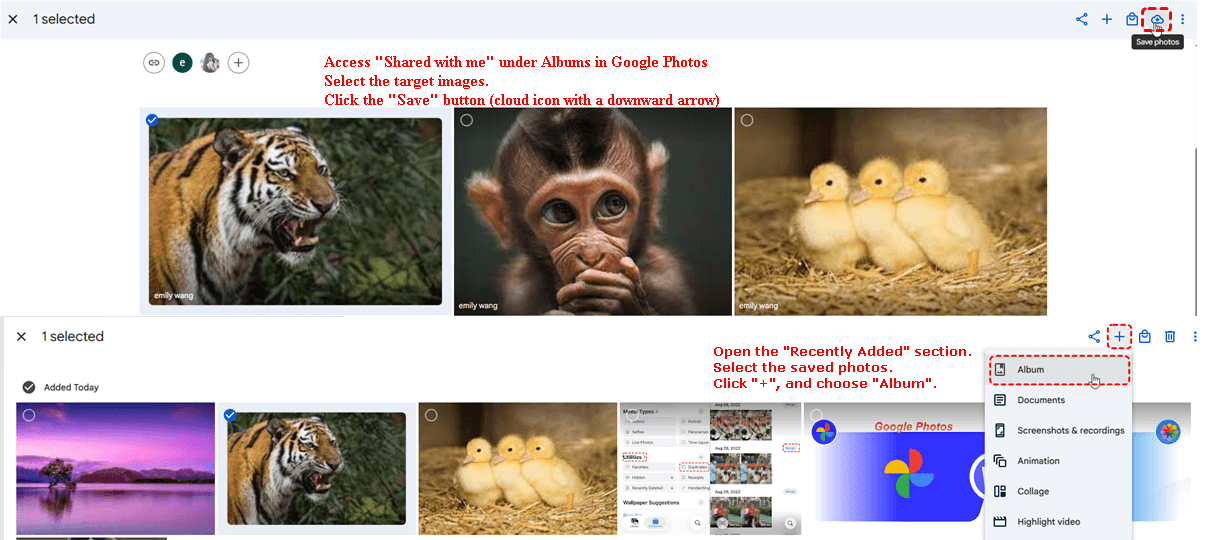
To move shared Google Photos pictures into iCloud folders, go to "Shared with me"under Albums in Google Photos and select the target images. Click the "Save"button (cloud icon with a downward arrow) at the top to add them to your library. Then open the "Recently Added"section, select the saved photos, click "+", and choose "Album"to organize them. Then download them (or transfer via MultCloud), and upload them to iCloud Photos.
Summary
After reading this article, you can learn how to transfer Google Photos to iCloud on PC/Android/iPhone for data protection. If you want to make it easy and convenient on both computers and mobile devices, MultCloud is a great choice. Apart from "Cloud Transfer", there are other advanced features such as Cloud Sync, Team Transfer, Email Migration, Remote Upload and Cloud Backup (like backing up iCloud to Google Photos).

- Cloud Sync: Supports one-way and two-way sync with modes like Mirror, Move, Cumulative, etc.
- Cloud Backup: Backs up files between clouds and allows easy restoration if data is lost。
- Team Transfer: Simplifies migration between business clouds like Google Workspace, Dropbox Business, etc.
- Email Migration: Download Emails to local device or transfer to popular cloud storage.
- Remote Upload: Downloads files from URLs, torrents, or magnet links directly to cloud storage
MultCloud Supports Clouds
-
Google Drive
-
Google Workspace
-
OneDrive
-
OneDrive for Business
-
SharePoint
-
Dropbox
-
Dropbox Business
-
MEGA
-
Google Photos
-
iCloud Photos
-
FTP
-
box
-
box for Business
-
pCloud
-
Baidu
-
Flickr
-
HiDrive
-
Yandex
-
NAS
-
WebDAV
-
MediaFire
-
iCloud Drive
-
WEB.DE
-
Evernote
-
Amazon S3
-
Wasabi
-
ownCloud
-
MySQL
-
Egnyte
-
Putio
-
ADrive
-
SugarSync
-
Backblaze
-
CloudMe
-
MyDrive
-
Cubby


Stay Updated With Our
Latest Tips
Add us as a preferred source on Google to never miss helpful guides.
 Add as preferred source >>