
Why Do You Need FTP Folder Sync?
As a common cloud file-sharing service used in an office or school, the FTP (File Transfer Protocol) has been used for many years before cloud storage services like Google Drive and OneDrive came out. However, as the amount of data grows and workflows become more complex, manually uploading, downloading, or copying files between FTP folders is no longer efficient. This is where FTP folder sync becomes essential.

For businesses, developers, and IT teams managing large amounts of files, FTP folder sync is not just about transferring data. It is about maintaining consistent, up-to-date, and reliable file copies across different storage locations.
- The most common reasons users look for an FTP folder sync solution include:
- Keep files consistent across multiple FTP servers without manually copying updates.
- Automatically back up FTP folders to another server or cloud storage to reduce the risk of data loss.
- Sync FTP with cloud storage for easier access, sharing, and long-term storage.
- Save time by automating repetitive file transfers instead of uploading changed files one by one.
- Reduce human errors caused by missing files, outdated versions, or accidental overwrites.
- Support ongoing website maintenance by keeping production, staging, or backup environments synchronized.
Whether you need to sync FTP folders between servers, back up FTP files to the cloud, or automate website file updates, here we have tested out a great solution for you to achieve automatic FTP sync with the cloud or another FTP server without downloading and uploading.
MultCloud: The Best FTP Folder Sync Software for Automatic File Sync
To let your FTP folder synchronize with another FTP server or cloud automatically, you just need to add your FTP and cloud drive accounts to a professional third-party multiple cloud storage manage platform, MultCloud, and click one button to easily sync FTP folder with another server or cloud. MultCloud supports 30+ leading cloud storage services, FTP, WebDAV, NAS, etc., and allows you to add all of them to a single interface for convenient cloud file management.

- One-Key Cloud to Cloud Sync/Transfer/Backup:The Cloud Sync, Cloud Transfer, Cloud Backup, and Team Transfer features can help you seamlessly sync files between clouds without any risk of data loss.
- Easily Use and Manage Multiple Clouds: You can upload, download, delete, rename, preview, copy, and cut files among all the added clouds quickly in MultCloud.
- Excellent Security for Clouds and Data Transfer: MultCloud uses 256-bit AES Encryption to protect your data during transfer. The OAuth authorization system will prevent MultCloud from recording the username and password of your clouds.
In MultCloud, there are 10 multifunctional sync modes provided by the Cloud Sync function for you to choose from.
- As a free user, you can try 4 basic sync modes such as Simple Sync and Real Time Sync in one-way and two-way.
- If you subscribe to MultCloud, you can then enjoy all the 10 helpful sync modes, including 6 advanced modes like Mirror Sync, Move Sync, Cumulative Sync, Incremental Sync, Update Sync, and Full Backup Sync.
| Your Goal | Best Sync Mode |
|---|---|
| Keep two FTP folders perfectly synchronized | Mirror Sync |
| Move files and remove them from the source after sync | Move Sync |
| Keep every backup version without deleting previous files | Cumulative Sync |
| Back up only changed files to save time and storage | Incremental Sync |
| Keep an existing destination folder up to date | Update Sync |
| Generate a full backup each time for maximum protection | Full Backup Sync |
How to Automatically Sync FTP Folders with MultCloud
Here we are going to show you how to sync FTP folder with a cloud drive like Google Drive. You can also use this wonderful method to easily achieve automatic FTP to FTP sync.
Step 1. Create a MultCloud account and log in.
Step 2. Click “Add Cloud” and choose the FTP icon to enter the information of your FTP account. Follow the same step to add another cloud drive or FTP server as your sync destination.
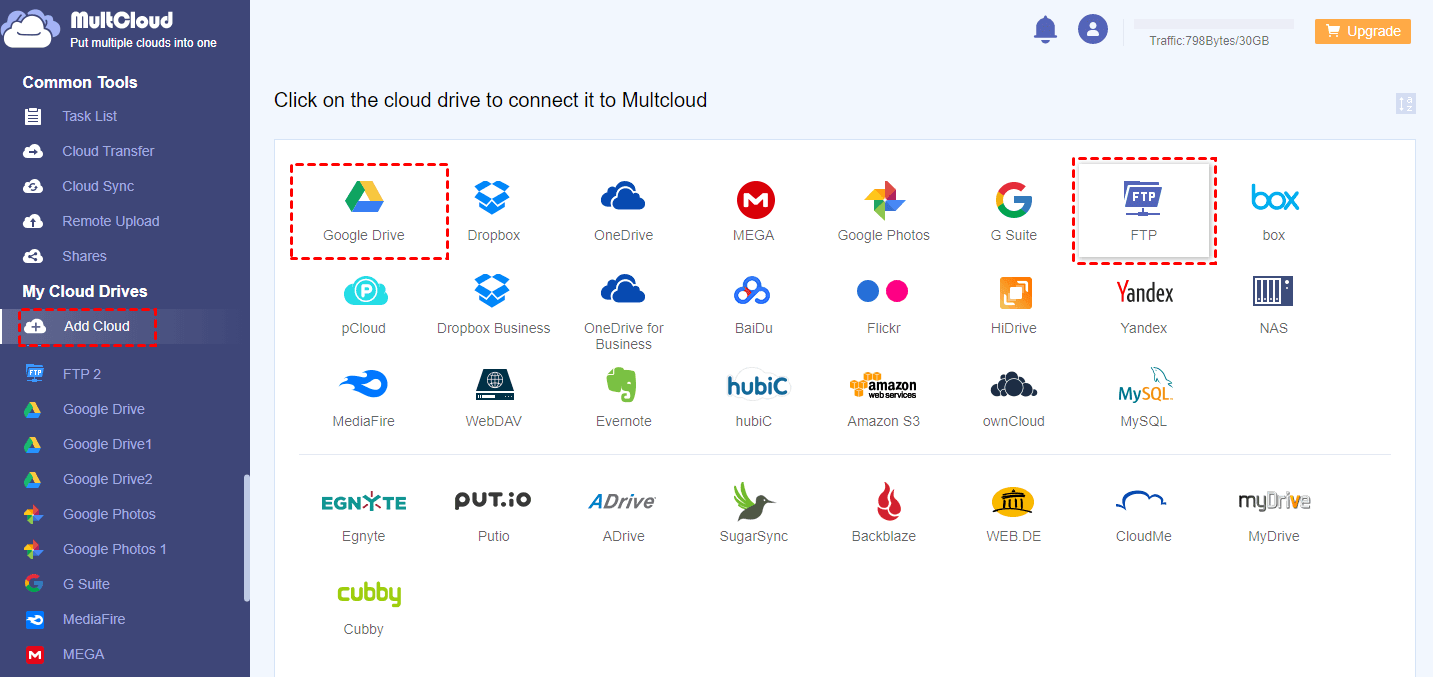
Step 3. Open the Cloud Sync function, select your FTP account or files and folders in FTP as the source, then select your Google Drive account or a folder in it as the destination.
Step 4. Click “Options” below to choose the sync mode you need most. Now just click the “Sync Now” button and MultCloud will seamlessly sync FTP with Google Drive.
Tips:
- Before starting the Cloud Sync task, you can turn on “Email Notification” in the “Options” to be informed right after the task is done.
- You can also click “Schedule” to choose a daily, weekly, or monthly plan to let MultCloud operate automatic FTP folder sync.
Bonus Tip: Back Up Your FTP Website Files to Cloud Storage or Another Server
Keeping your FTP folders synchronized is a great way to ensure files stay consistent across servers and cloud storage. However, synchronization isn't the same as backup. If a file is accidentally deleted, overwritten, or infected with malware, those changes may also be synced to the destination. To better protect your website, it's a good idea to maintain a separate backup that allows you to restore previous versions whenever necessary.
MultCloud Website Backup feature lets you back up FTP websites directly to cloud storage online. Since the transfer runs entirely on MultCloud's servers, your computer doesn't need to stay powered on during the scheduled backup.
Step 1. Log in to MultCloud and locate "Website Backup" in the left sidebar.
Step 2. Click "WEBSITE TO BACKUP" > "Add Website" and enter the FTP credentials to add it to MultCloud. Add a cloud drive or another FTP server with the same step.
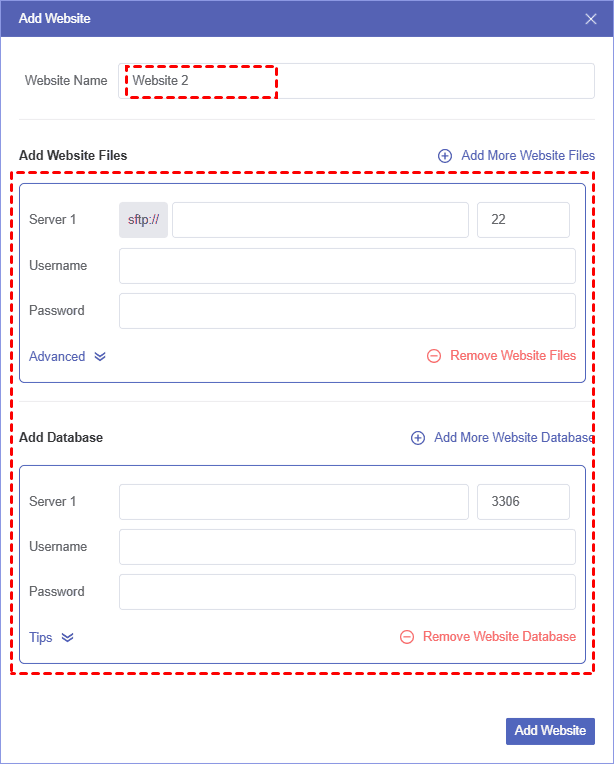
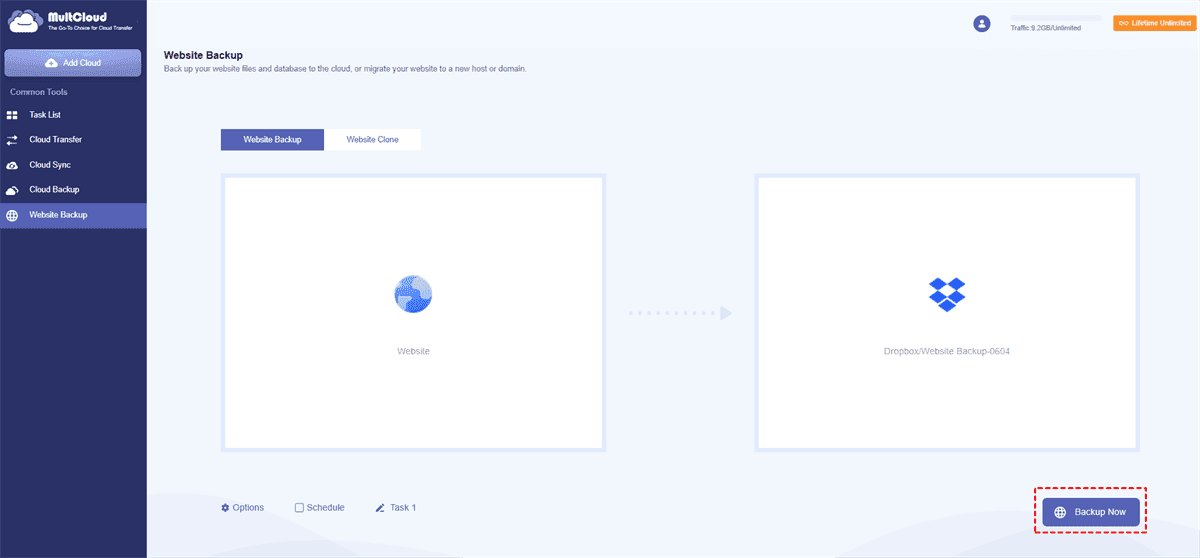
Step 3. Choose the files or folder you want to back up and select a destination folder, then click "Backup Now". In the "Options" or "Schedule" button, you can configure email notification or scheduled task like Cloud Sync.
Conclusion
Automating FTP folder sync doesn't have to be complicated. With MultCloud Cloud Sync, you can keep your FTP folders synchronized with another FTP server or cloud storage service automatically, saving time while ensuring your files stay up to date.
Beyond synchronization, MultCloud offers a complete set of file management tools like Website Backup to create versioned backups of your FTP website for easy recovery, Cloud Transfer to migrate files between FTP servers or cloud services without downloading them locally, and Team Transfer to simplify large-scale business migrations. Whether you're maintaining a website, backing up business data, or moving large volumes of files between servers, MultCloud helps you automate the entire workflow securely and efficiently.
FAQs
Why is FTP folder sync important?
What are the common use cases for FTP folder sync?
Is FTP the only protocol for folder synchronization?
Does FTP folder sync keep deleted files synchronized?
Can I sync FTP folders without downloading files locally?
How to sync local folder with FTP server?
MultCloud Supports Clouds
-
Google Drive
-
Google Workspace
-
OneDrive
-
OneDrive for Business
-
SharePoint
-
Dropbox
-
Dropbox Business
-
MEGA
-
Google Photos
-
iCloud Photos
-
FTP
-
box
-
box for Business
-
pCloud
-
Baidu
-
Flickr
-
HiDrive
-
Yandex
-
NAS
-
WebDAV
-
MediaFire
-
iCloud Drive
-
WEB.DE
-
Evernote
-
Amazon S3
-
Wasabi
-
ownCloud
-
MySQL
-
Egnyte
-
Putio
-
ADrive
-
SugarSync
-
Backblaze
-
CloudMe
-
MyDrive
-
Cubby

Stay Updated With Our
Latest Tips
Add us as a preferred source on Google to never miss helpful guides.
 Add as preferred source >>